|
Issue
Front Load Washer Smells Bad (Buildup of Mold, Mildew,
Odor, Musty, Burning, Washer Stink, Sewer Smell)
Solution
When the customer complains about odor from
the washer, please suggest the following:
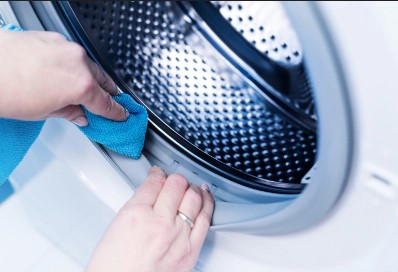
- Good Practice: After
you finish the laundry, make sure the detergent drawer is clean, and then
wipe the drum and door seal with a clean, dry cloth. If possible, leave
the door and the detergent drawer slightly open.
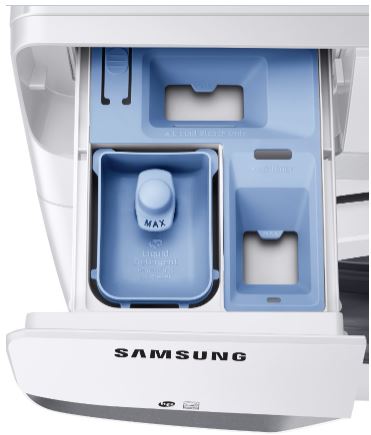
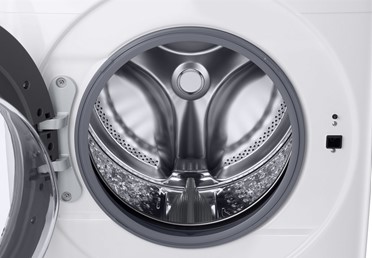
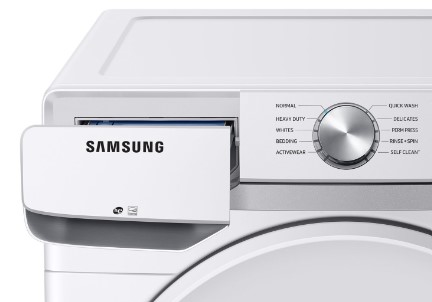
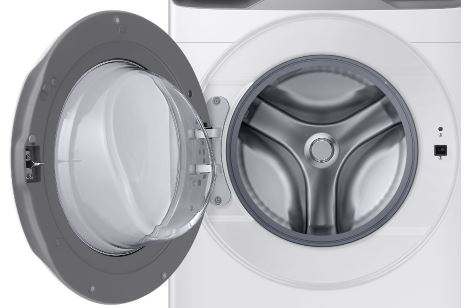
- Leave the door open: It
is recommended to leave the washer door open after every wash (for at least
1 hour) to allow air to circulate and prevent mold / mildew from building
up.
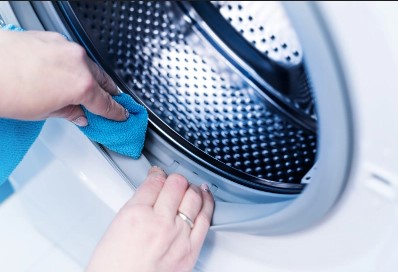
- Clean the inner surface: Spray
bathroom cleaner on the gasket and drum, wait half an hour and wipe the
surface to prevent mold/mildew from building up inside the washer.
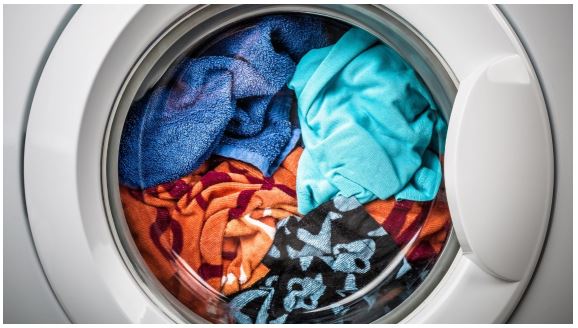
- Do not let clothes sit in the washer:
Empty the washer within an hour
after the load is completed. Clothes that sit in the washer for a long time
can redeposit moisture into the washing machine. For this reason, avoid
washing right before bedtime or before going to work in the morning.
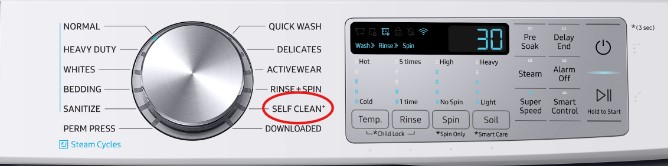
- Use the Self Clean function once a
month: Use the self-clean function
with washing machine cleaner like Affresh
to help soften, scrub and remove any built up behind the drum and in the
system in general. Sanitize or Pure Cycle are just another name for Self-Clean,
refer to user manual for the correct name for the customer model.
Note:
During the wash cycle, the machine does not fill up to the maximum level, but
during the rinse cycle the drum is filled to the maximum level and if the drum/tub
has mold/scum built up on it, then during the rinse cycle the water and residue
mixes and leave a bad smell on the customer's laundry.
- Dilute your fabric softener: Concentrated
fabric softener can become deposited in the detergent drawer and on the
front door seal. Once deposited, the softener can become sticky, allowing
the dirt from the clothes to adhere to those surfaces. If the washing debris
builds up, it can cause bad smell. To prevent softener build-up, dilute
the concentrated fabric softener by adding water to the fabric softener.
The mixture should be 1/6 fabric softener and 5/6 water.
- Clean the drain filter: The
drain filter should be cleaned periodically to prevent odors. Lint that
is saturated with soap and fabric softener will stay in the drain filter
to prevent damage to the drain pump. However, a clogged filter will prevent
dirty water from draining fast enough and that can cause bad smell.


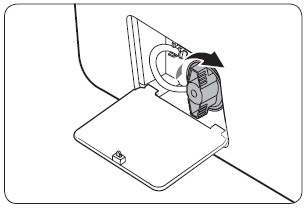
Warning: Turn
off the washer, and then unplug the power cord, refer to the images above:
- Gently press the top area of the filter
cover to open.
- Remove the plug from the drain tube to
drain the system (have a tray ready to collect the water).
- Drain the system (approximately 1 liter
of water).
- Turn the pump filter knob (A) counterclockwise,
and then drain the remaining water.
- Clean the pump filter using a soft brush.
- Reinsert the pump filter, and then turn
the filter knob clockwise.
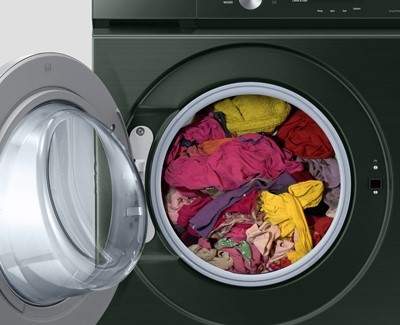
- Do not over load your washer: An
overloaded washer does not remove the proper amount of moisture from the
clothes. The excess moisture remains in the bottom of the drum, and this
can cause an odor. Medium load is recommended.
- Level the washer: A
washer that is not level (especially if it is tilted forward) tends to leave
water, detergent, and fabric softener in the detergent drawer after a wash.
As time passes, detergent can build-up and emit a sour odor. A sign that
your washer is unbalanced is when your clothes are still very wet after
the final spin cycle.
* Warning:
If there is a burning
smell, then
the washer requires service.
* Note:
If customer calls back
stating that they tried the above instructions, but it still smells, then
the washer requires service.
Affresh:
- This is available at local stores (e.g.,
Walmart, Target, etc.). These are slow-dissolving foaming tablets that you
put directly into the drum (without clothes in the unit).
- You should follow the instructions on
the "Affresh"
package. "Affresh"
tablets work to penetrate, dissolve, and remove the residue that can build
up in the washing machine.
- In addition, you can try using the following
cleaning agents in a hot water cycle (without clothes): 1/2 cup of Cascade
+ bleach + vinegar.

How to clean the detergent
drawer:
To thoroughly clean the detergent drawer, follow
the procedure below:
- Press and release the lever on the inside
of the dispenser and pull the dispenser drawer out.
- Remove the siphon cap from the fabric
softener and bleach compartments.
- Wash all the parts under running water.
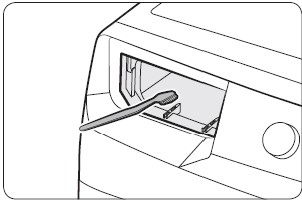
- Clean the dispenser recesses with a soft
brush.
- Re-insert the siphon cap and push firmly
into place.
- Re-install the detergent draw.
- Run a rinse and spin cycle with no load
in the washer. Add a cup of chlorine bleach to the liquid bleach dispenser.


How to SELF-CLEAN:
Over time, residue from washer detergent (which
is made from animal fats), soil, lime scale, and iron can collect in washing
machines, which produces odors.
To eliminate odor, run cleansing cycles to
sanitize the machine.
- Silver Care: If
their washer is equipped with "Silver Care", run a complete "Silver
Care" cycle with no laundry in the machine and use washing machine
cleaner like "Affresh" or Bleach. This will remove bacteria from
the washer.
- Sanitize Cycle: If
their washer does not have "Silver Care", run a "Sanitize"
cycle with no laundry in the machine using hot water and bleach. You may
have to run a few cycles to remove the odor from your machine. Not all washers
have a "Sanitize" cycle. If your washer does not have a "Sanitize"
cycle, run a Hot Cycle or Pure Cycle.
- Pure Cycle: This
is a cycle exclusively designed to cleanse the machine. Your washer will
prompt you to run a Pure Cycle after every 40 loads, but you can run this
cycle any time. Pure Cycle uses 150 degrees F water and spins the drum for
2 hours to break up persistent detergent, soil, lime and calcium deposits
that may have accumulated in the drum over time. This helps eliminate and
prevent odors.
Warning:
You should NEVER
run a cleansing cycle with clothes in the unit. It will damage both your laundry
and your washing machine.
|

