|
PROBLEM 1:
Clothes Are Wrinkled at End of Wash Cycle
SOLUTION 1:
- If clothes are coming out of the wash cycle wrinkled, this does not indicate a problem with the machine. Throughout the course of a wash cycle, clothes are continually tumbling. No washing machine can completely prevent wrinkling.
- However, to help minimize excessive wrinkling and deep creasing, you should be careful not to overload the washing machine. The rule of thumb is that a washer is considered full when the drum is 2/3 full. Anything beyond this can create performance issues, including excessive creasing in clothing.
- In addition, you can select the Permanent Press cycle to help minimize wrinkling.
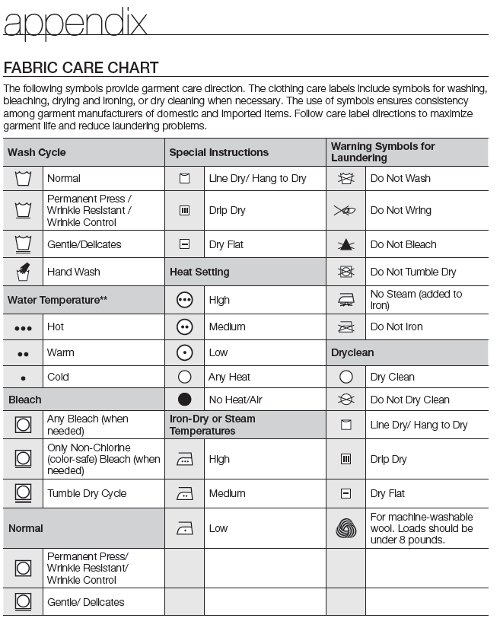
- Make sure to follow the care instructions for your clothes (located on the garment) to maximize garment life and reduce laundering problems. They should also consult the Fabric Care Chart located in their user manual's appendix.
PROBLEM 2:
Laundry Is Still Damp at End of Wash Cycle
SOLUTION 2:
If your washing machine isn't spinning properly or does not spin at all, clothes maybe dripping wet at the end of the load. This is because the water from the wash cycles has not been "spun out" during the spin cycle.
- If this happens every time you do a load, check the temperature of the room where the washing machine is located. If you keep your washer in the basement or garage, the temperature may be very cool and preventing the wash from spinning properly.
- If possible, try to warm up the room's temperature. If this is not an option, have them run wash cycles using warm or hot water. This will warm up the washer, and it will spin properly.
AGENT ONLY:
In cooler temperatures, these models - WF209, WF218, or WF219 - experience spinning difficulties. DO NOT tell the customer that this is a known issue.
PROBLEM 3:
Stains on Clothes
SOLUTION 3:
If your wash is coming out with bluish colored stains, you are probably overfilling the detergent compartment or the fabrics softener compartment.
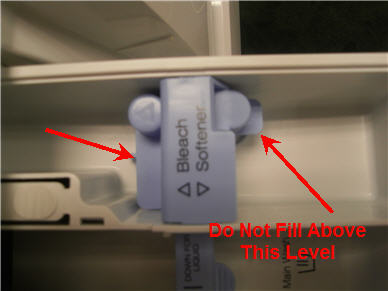
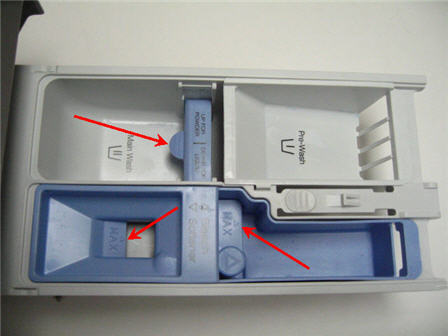
- If you overfill either one of these compartments, the detergent or fabric softener will immediately dispense into the wash tub, undiluted, onto your clothes. Concentrated detergents contain fatty acids that cause stains if poured on your clothes undiluted.
- To prevent this kind of staining, fill the detergent and fabric softener compartments only to the max level indicator (see the illustrations below).
- A normal cycle will add water to the drum and evenly wet the load before any detergent is introduced into the wash tub. Once this action is complete, the detergent will be diluted and dispensed into the wash tub.
- If you are experiencing this problem, run a sanitize cycle with no clothes to clean the machine. Then, use the recommended amount of detergent and fabric softener when you wash your clothes.
Important: Do NOT overfill the bleach compartment because it will also be dispensed immediately into the washer drum without being diluted.
PROBLEM 4:
Clothes Are Coming Out Damaged
SOLUTION 4:
Spin Speed Is Too High
If your clothes are coming out damaged, make sure you are using the correct cycle. To avoid damage to delicate fabrics, use the Delicate or Hand Wash cycles. The clothes are being damaged because the spin speed is too fast for the type of garment being washed.
PROBLEM 5:
Clothes Are Not Getting Clean
SOLUTION 5:
If the washer seems to be working normally, but the clothes are not clean enough, the potential reasons are:
- Poor Maintenance: the washer itself is dirty with soap residue, mold, or mildew.
- Incorrect Usage: incorrect settings or cycles are being selected, or the washer is being overloaded.
- Choice of Detergent: cleaning performance will vary between detergents.
- Environmental Conditions: areas with hard water, large silt, or sand deposits.
To improve cleaning performance, please verify the following:
- Make sure the best cycle and settings are being used for the load. Each cycle performs differently; if the correct cycle is not selected, your clothes may not be cleaned properly.
- For instance, if the load contains a lot of heavy clothing (denim, wool, down materials, etc.) that are heavily soiled, the Heavy Duty cycle is recommended.
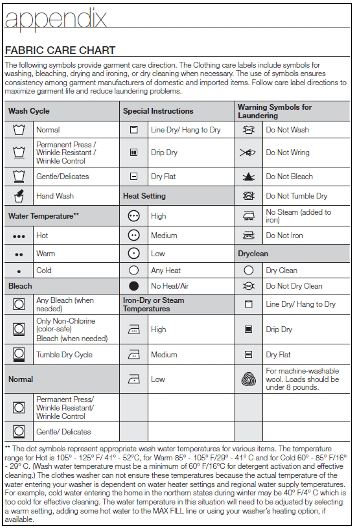
- Always follow the care instructions for pieces of clothing (located on the garment) to maximize. Also, consult the Fabric Care Chart located in the User Manual's appendix, which will vary between models.
- To optimize cleaning performance, sort loads not just by color, but also by fabric type and temperature.
- Use only HE (High Efficiency) detergent and make sure to follow the manufacturer's recommended amount.
- Using too much or too little detergent can cause cleaning performance and odor issues. Depending on the concentration of the detergent and size of the load, it's possible to use too much detergent even without going over the max line. Always follow the detergent manufacturer's recommended amount.
- Cleaning performance will vary between detergents. Detergents may also be more effective on certain types of materials than others, or for different temperatures. Some experimentation with different types or brands of detergent may be necessary to determine an effective preference.
- Fabric softeners can also affect cleaning performance if too much is used. Fabric softeners often leave a residue on fabrics, which can cause cause stains on certain fabrics or prevent towels to from absorbing moisture as effectively. Follow the manufacturer's directions for both the fabric softener and the fabric's care label when using fabric softener.
- Overfilling the compartments past their MAX level will cause the detergent or softener to enter the wash prematurely. This will negatively affect cleaning performance and may stain fabric. If the manufacturer's recommended amount exceeds the washer's MAX line, use a different detergent with a higher concentration and smaller recommended amount.
- Apply a stain remover pre-treatment to tough stains and pre-soak heavily soiled garments.
- When possible, soak and treat stains immediately as they occur. If this is not possible, leave the stained clothing submerged in water with a small amount of detergent until the stain can be addressed. If stains are allowed to dry, they may become permanent, and the washer may not be able to remove them.
- Do not overload the washer. If the washer is overloaded, detergent may not reach all of the clothes in the load, resulting in lower cleaning performance.
- Verify that the unit is level. If the unit isn't level, multiple issues can occur, such as the unit spinning at a low speed.
- If the washer has Calibration Mode, then recalibrate the washer. This will reset the weight calibration on the washer, and optimize the amount of water used in the selected cycle.
- For hot water cycles, verify that hot water supply is connected and the valve is completely open.
|

