|
No title
Issue 1
Front Load washer Is Leaking (door, underneath,
on floor, side, detergent drawer, gasket, filter case, front, side, top, bottom)
Solution 1
Top 3 questions to ask
customer when washing machine is leaking:
- Where is the unit leaking? (front, side,
top, back, bottom, door, detergent drawer, drain filter)
- How much water is leaking, puddle of water
or flooding the room?
- Is it clear water or soapy water?
WARNING:
If customer reports that it's flooding the room, please ask customer to shut
off water supply and call a plumber ASAP.
A. Leaking
from the front: Please ask customer to inspect the following using a flashlight,
please use visual support
1. Detergent
dispenser drawer: Look for traces
of dried soapy water from beneath the detergent drawer using a flashlight.
- All detergents are not made
equally; customer must follow the instructions on the bottle/box to avoid using
excess detergent. (small, medium or large load)
Warning: Avoid
using pods; pods are designed for full loads only.
Note:
If the machine is wobbling, water will leak from the dispenser as well (levelling
issue, see next step below)
- If there is a leak directly
from the detergent drawer, use less detergent (use HE detergent only), make
sure the drawer is fully closed, before starting the machine.
- If the dispenser is blocked
with lumped detergent, remove it and clean the drawer inside.
- Make sure to use only HE
detergent.
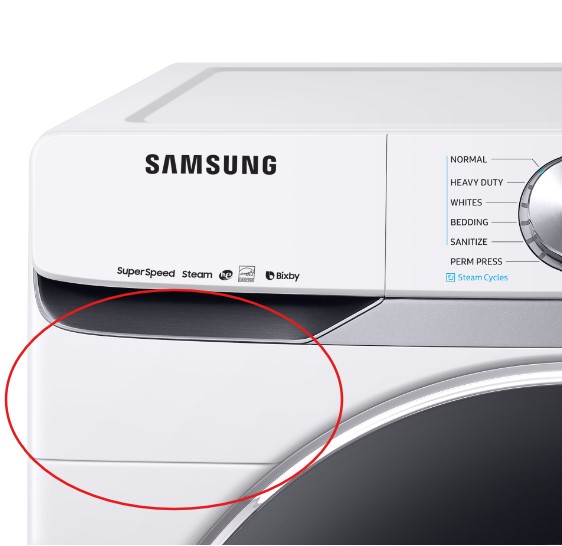
2. Levelling
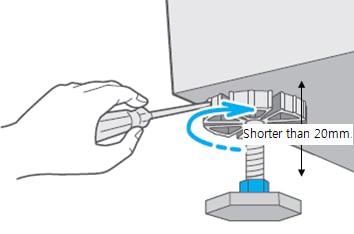
the legs:
- Even if one of the levelling
feet are not touching the ground, the machine will rock and wobble, and water
will leak from the dispenser.
- If the machine is tilted
forward, water will leak from the dispenser as well.
Adjust legs as needed:
- Adjust the front leveling
legs by turning it to raise that corner of the washer.
- Continue to make adjustments
and repeat until the washer is level.
- As you are making adjustments,
keep in mind that the shorter you can keep the legs, the more stable the washer
will be.
- Once the washer is level,
use the locking nuts to lock the feet at the position they were adjusted to,
so it doesn't move.
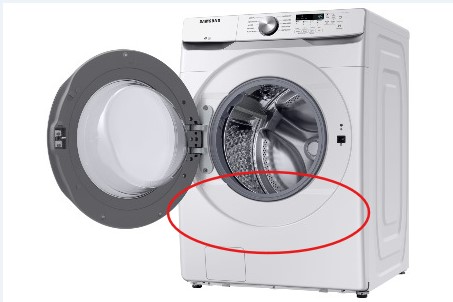
3. Door:
Look for traces of dried soapy water from under the door using a flashlight.
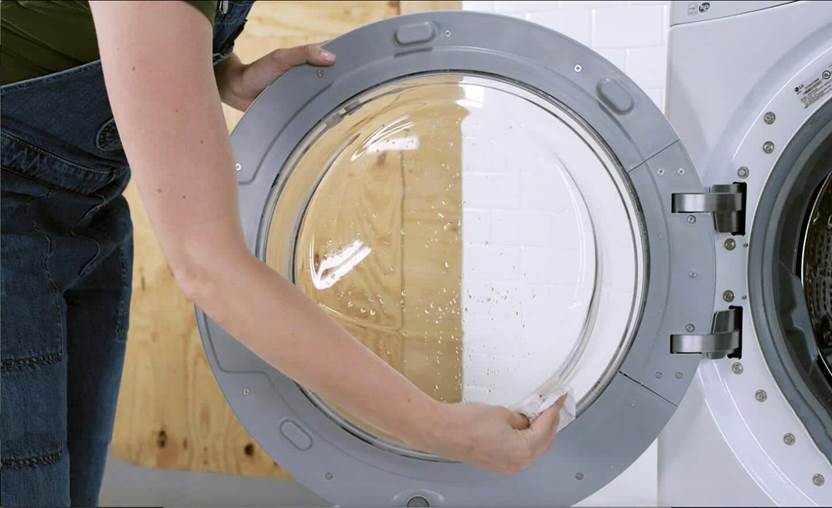
- Pets hair or human hair
can prevent the door from sealing properly, ask customer to open the door and
use a flashlight to see through the glass (bottom part) to see how dirty it
is, it's hard to see without proper lighting.
- Open the washer's door and
check if the rubber gasket is ripped/damage.
- Clean the door and rubber
gasket thoroughly.
- If
the door gasket is damaged/pierced, book
a service call.
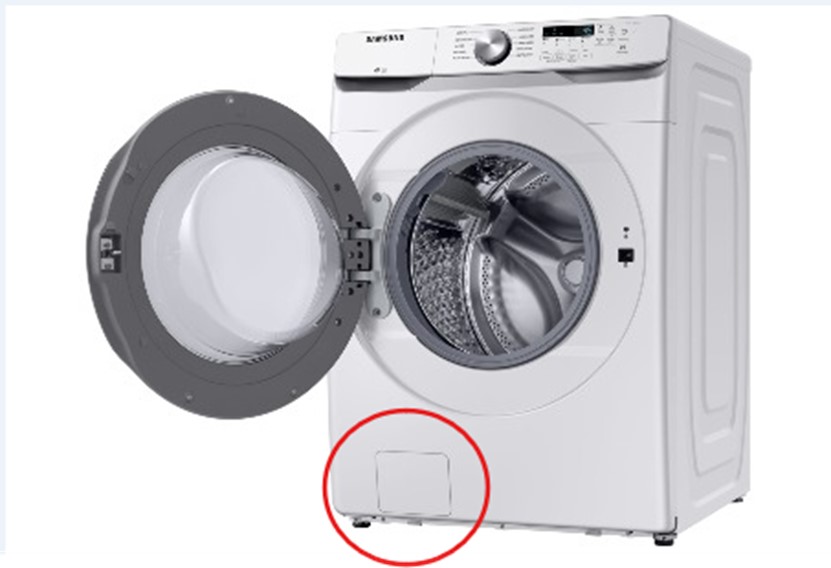
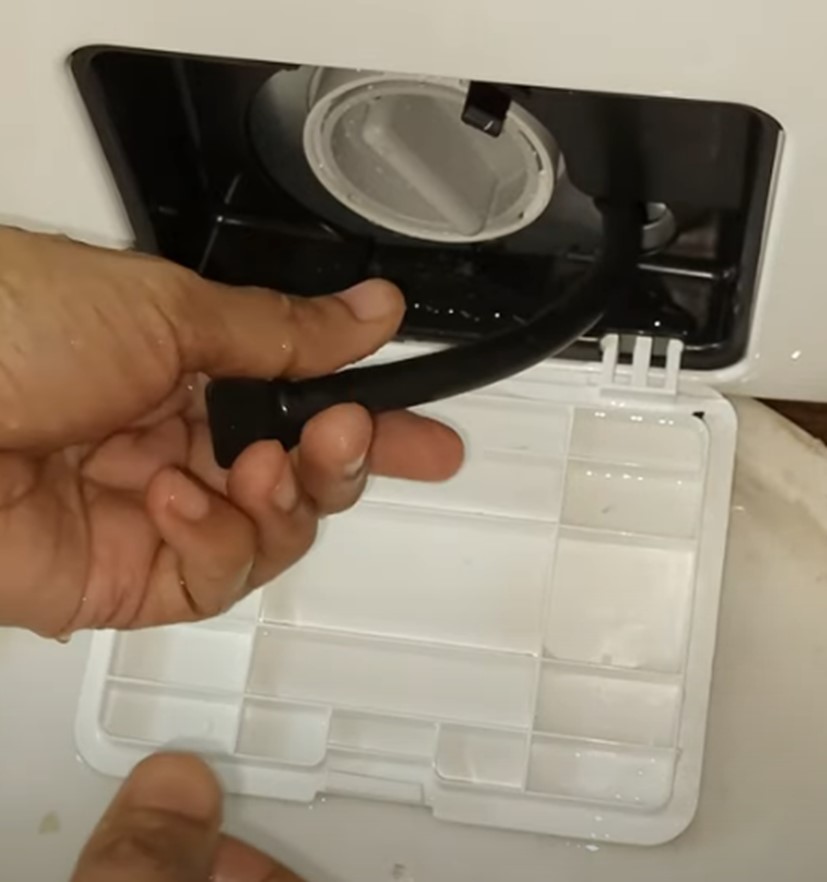
4. Drain
filter case:
- Open the drain filter door
and check if it's wet around the filter.
- This is the lowest point
of the machine, and is designed to purge all water in the system for maintenance
and repairs purposes.
Note:
If the drain tube cap or the drain filter is loose, water will leak from it
all the time, even if the machine is off.
B.
Leaking from the back:
Ask customer to check the following using a flashlight or use visual support:
1. Was
the unit recently installed (less than 30 days)?
If yes, customer must
call installer to check the
hoses and levelling
2. Water
inlet hoses:
- Check both cold and hot inlet hoses from
the tap to the machine to see if it's wet or dripping.

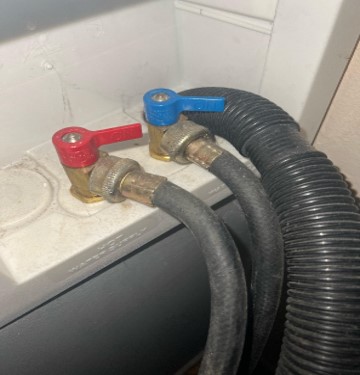
Note:
If the hoses are loose, water will
leak from it all the time, even if the machine is off.
3. Air
Vent:
(Excess Detergent)
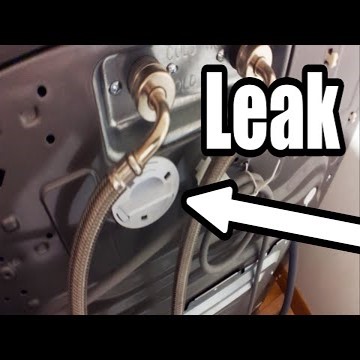
- Look for traces of dried soapy water from
the air vent, if customer used too much HE detergent or non-HE detergent,
excess suds will be produced and leaks from the air vent at the back of
the machine.
- Using too much detergent
or non-HE detergent (even once) will result in excessive suds, causing residue
that contributes to performance issues.
- Run an empty cycle (rinse&spin
or quick wash), do not add detergent or any other additives, after 10 minutes
if suds/foam (soap bubbles) appear inside the washer, it is coming from
the detergent residue and you should continue to run empty cycles or self-clean
until suds no longer appear.
- Use the right amount
of HE detergent.
Detergent guidelines:
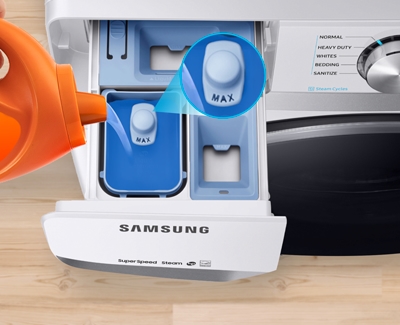
- Do not exceed the MAX line
in the detergent drawer.
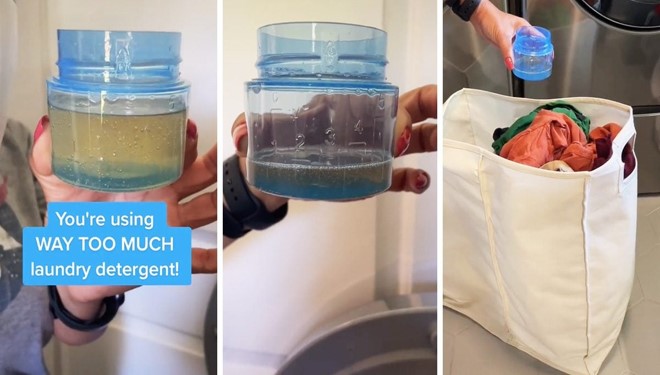
- Do not exceed the maximum
recommended by your detergent's manufacturer for the load size you're washing.
- If you're using liquid detergent,
make sure the Liquid Detergent Tray is in the drawer.
- If you're using powdered
detergent, make sure the Liquid Detergent Tray is removed.
Note:
All detergents are not made equally; customer must follow the instructions on
the bottle/box to avoid using excess detergent.
Warning:
Avoid using pods; pods are designed for full loads only.
Do not exceed the MAX line in the detergent
drawer.
Do not exceed the maximum recommended by your
detergent's manufacturer for the load size you're washing.
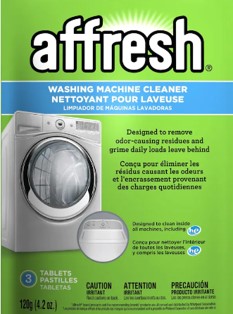
Note: Customer
must run self-clean using Affresh to clear the excess detergent, it is recommended
to also clean the drain filter after self-clean (see instructions in the user
manual).
4) Drain
Hose:
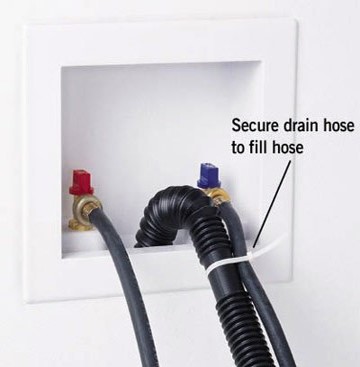
- Check if the drain hose is hooked up correctly
onto the drain stand pipe. If not water might spill out during the drain
cycle.
Note: Issues
caused by an incorrectly installed drain hose are not always experienced immediately
after installation, but can still be resolved quickly and easily.
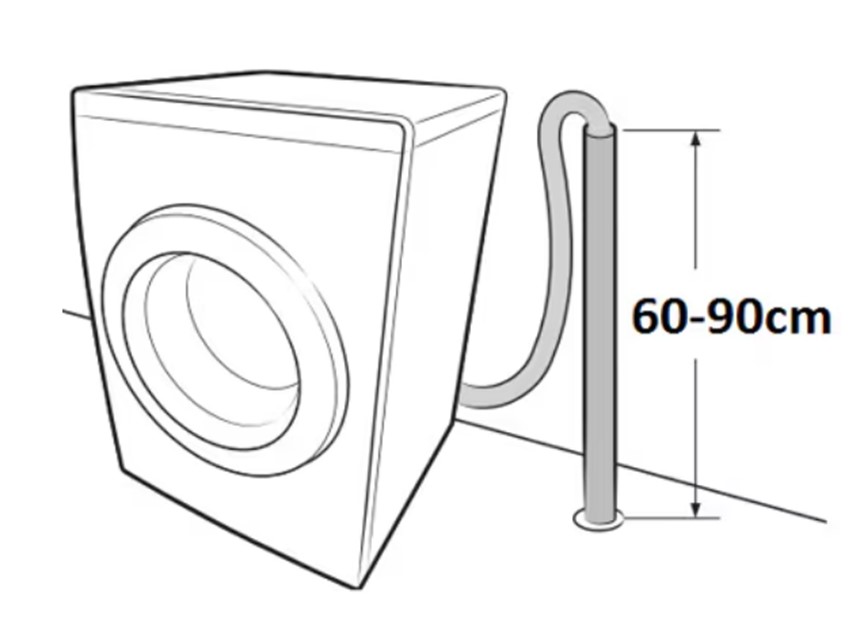
- The drain hose must be inserted into
the drain pipe at least 6 inches, and no more than 8 inches.
- Use the hose guide included with the washer
to help, and secure the drain hose with a zip tie.
- If the drain hose is more than 8 inches
deep, it causes a siphoning effect which will then cause washer issues.
If the drain hose is inserted less than 6 inches, it may fall out and spill
water.
- Make sure the drain hose does not form
an airtight connection.
- An airtight connection creates a vacuum
or suction effect that also causes siphoning.
- Measure and confirm the height of the
drain hose.
- Most homes will already have the correct
measurements but it is good to check anyway.
- The drain hose should be positioned at
least 18 inches high and not more than 96 inches high, and you should not
use a drain hose extension kit.
- These requirements are different if a
sink is being used.
- The drain hose should be positioned at
least 24 inches high for sinks and not higher than 35 inches.
- Inspect the drain hose for damage,
kinks, or bends.
- The hose should run smoothly from the
washer to the home's drainage system.
- Anywhere that it is bent or pinched can
cause leaks or draining issues.
- If the drain hose
is damaged/pierced, book a service call.
- Confirm the drain hose holder or zip
tie is installed.
Removing the drain hose may cause the
washer to drain automatically and give an LC or 4C error code.
C. If
customer confirms that it's just a puddle of water but cannot identify the source,
then ask customer to select the cycle that they selected the last time when
it leaked to replicate the issue, and ask them monitor and record a video with
flashlight and send us to review.
D. TIPS:
What to do if Detergent
/ Bleach / Softener drains immediately?
- Do
not exceed the MAX line.
For additives that do not use the detergent
drawer, such as when adding bleach to a top load washer, there is no max line
and the additive will drain out of sight immediately. Mostly this goes to the
cavity between the outer drum and spin basket, but some may actually be seen
entering the tub. For additives in the detergent drawer, though, stay below
the MAX line, or the additive will immediately drain into the tub.
- Clean
the detergent drawer.
The detergent drawer needs periodic cleaning.
If residue is left in the drawer, it can mix with the additive you are adding
and simulate going over the MAX line, causing draining.
Double check that your washer is level. The
user manual for your washing machine is the best place to find specific information
on how to level your appliance. Improper alignment of the washer can cause the
detergent drawer to not be aligned either. This may result in a tilt which causes
the additives to go over the MAX line and drain immediately after you close
the drawer.
- Replace
the detergent drawer.
If you continue to have issues with additives
draining immediately, there may be some defect in the detergent drawer. For
a warranty replacement, contact us. For out of warranty purchases, visit samsungcanadaparts.com.
|

