|
PROBLEM 1:
How To Load The Dishwasher
SOLUTION 1:
Follow these steps to properly load your dishwasher and get the best results:
- Make sure the racks are being loaded as shown in the user manual.
- The lower rack is for larger items that should face towards the bottom center (dinner dishes, soup bowls, plates, pots, pans, lids, and casserole dishes).
- The upper rack is for smaller items that should face downward (cups, mugs, glasses, small plates, and stemware).
- If the lower rack is empty, it is still recommended to place smaller items only on the upper rack. Face the dirtiest side of each dish toward the center of the dishwasher.
Lower Rack

Upper Rack
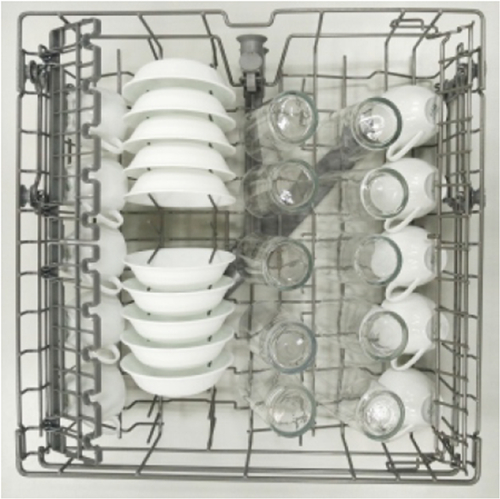
- Verify no dishes are blocking the spray arms from spinning freely.
- Do not allow items to extend beyond the racks. Be particularly careful with pot handles and utensils which may stick below the rack accidentally.
- Make sure food remains (such as bones or fruit seeds) and any other kind of waste (such as toothpicks or paper) are removed from the dishes before loading.
- Check that knives, spoons, and forks are placed separately into the basket covers. This will prevent chipping and discoloration.
- Load knives with their handles up and spoons and forks with their handles down.
- Be sure thin, finely pointed items do not extend through the basket; this could block the lower wash arm.
- Some models provide a cutlery basket which has the option for individual slots for each utensil. See the user manual for recommendations of which type of utensil to put in each slot. The cutlery rack can be used with the cover open if preferred.
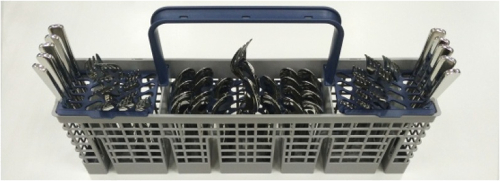
Loading the dishwasher correctly is required for optimal cleaning and drying performance. For best results, see the user manual for the full list of options and loading guides specific to the model.
|

